In the world of front-end development, choosing the right CSS framework is a key decision. Two of the most popular options are Bootstrap a Tailwind CSS. Each has its own merits, but when looking at efficiency, versatility, and long-term support, Bootstrap is clearly the better choice. This article will explain why.
1. Familiarity and Community
The article was revised and updated in May 2026. Check with specific service providers for technical information.
Bootstrap is one of the longest-standing CSS frameworks, which means it has a huge community of users. This fact brings many advantages:
- Fast support: There are plenty of forums, tutorials and documentation for implementation issues.
- Third-party libraries: Huge number of available components and extensions.
Tailwind CSS is a relatively younger framework, and while it's growing rapidly, it still lacks the range and depth of support that Bootstrap offers.
2. Ready-to-Use Components
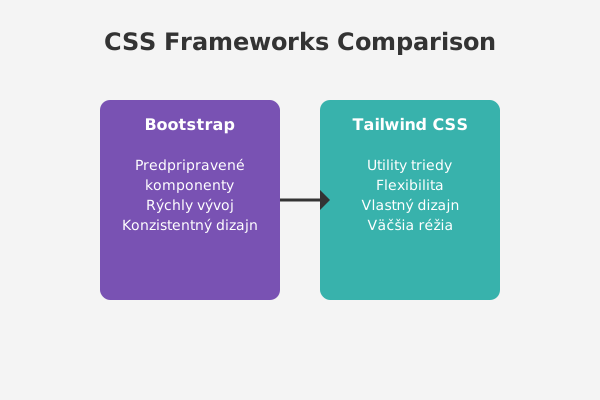
Bootstrap comes with a lot predefined components, such as buttons, modals, carousels, and navigation panels. These components are easily customizable and allow developers to quickly build fully functional user interfaces.
In contrast, Tailwind CSS is a utility-first framework, which means that developers must build components from the ground up using a number of classes. While this offers more flexibility, it requires more design time and effort.
3. Consistency of Design
Bootstrap automatically ensures a consistent look throughout the project. Predefined styles and a grid system allow you to maintain the same visual style without unnecessary tuning.
Tailwind allows a lot of freedom, which can lead to inconsistency in design if not carefully managed. In larger teams, this can cause complications and unnecessary rebuilds.
4. Learning curve
Bootstrap has a simple and intuitive structure. Developers who use it for the first time can immediately start creating high-quality interfaces without long studies of documentation.
Tailwind CSS, on the other hand, requires understanding dozens of utility classes and their combinations, which increases the time it takes to master the framework.
5. Universality and the Future
Bootstrap is widely accepted in the industry and is supported by a project team that constantly releases updates and new features. It is a proven technology that companies can rely on for long-term projects.
Tailwind CSS, although it offers a modern approach, can be difficult to integrate in projects where a certain design standard or framework already exists.
6. Code purity in HTML
One of the biggest advantages of Bootstrap is its ability to keep HTML code clean and simple. Thanks to the use of predefined components and styles, it is possible to create complex user interfaces with a minimum number of custom classes. The result is readable and maintainable code, which is especially appreciated by larger development teams.
On the other hand, Tailwind CSS leads to the so-called "brothel" in the code, that is, to crowded HTML files that contain dozens to hundreds of utility classes. Even a simple element can contain a number of redundant classes, which increases the complexity of maintenance and orientation in the code. For larger projects, this problem is compounded, which can lead to unnecessarily complicated development.
7. Integration with Reactive Frameworks like Vue.js
Bootstrap seamlessly integrates with reactive frameworks such as Vue.js, thanks to its simple structure and predefined components. Using libraries like BootstrapVue, native Bootstrap components can be used directly in a reactive environment, which significantly speeds up development and improves UI consistency.
While Tailwind CSS works well with Vue.js, it requires more effort from developers to implement reactive elements. Creating dynamic components often creates a lot of duplicates and unnecessary code, which can slow down development and reduce code clarity. Bootstrap thus offers smoother and more efficient integration into modern frameworks.
Conclusion: Why Bootstrap?
In a company where productivity, speed of development and consistency are important, it is Bootstrap a clear choice. Its broad support, ease of use, and robust toolset ensure that every project is executed efficiently. Tailwind CSS may be suitable for experimental or small projects, but for long-term enterprise applications, Bootstrap is indispensable.