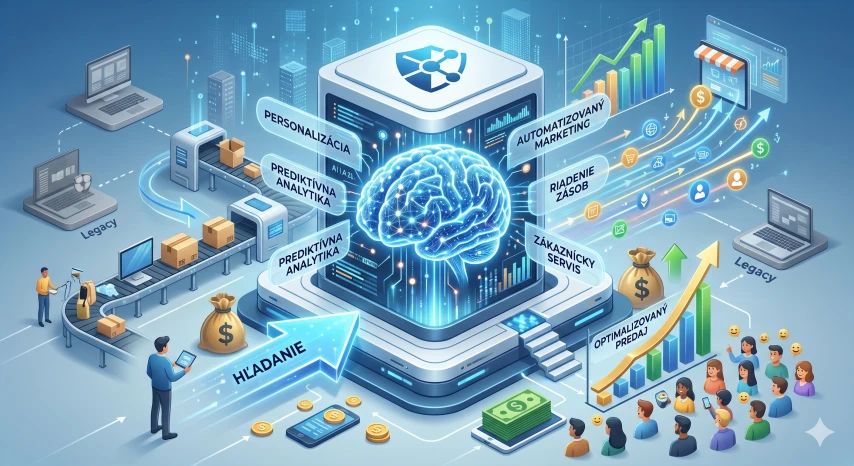
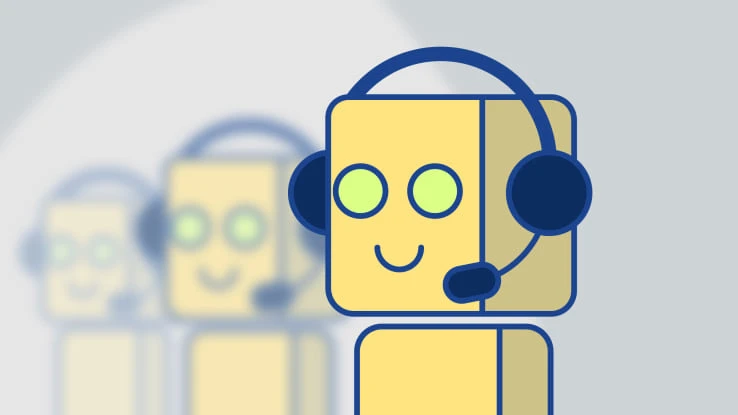
When someone says the word "Bot," most people probably think of the iconic R2D2 from Star Wars. In fact, however, the chatbot for B2B looks more like this:
The article was revised and updated in May 2026.
photo source: martechadvisor.com
The truth is that there is nothing more hidden behind bots than just a program composed of a lot of codes. Bits and bytes.
But don't hang your head. The magic of bots is realistically. If you are a B2B marketer or sales manager wondering how you can benefit from this, read more. Bots can add value to everything you do – process performance, automation, analytics, acquisition, conversion, retention, customer care, etc.
So, a chatbot for B2B focused sales and marketing. What is it about? Where are they appropriate? What can they help you achieve and how? Are they really worth the investment of time and resources? Let's take a closer look.
The three C's that drive sales and marketing bots
We all probably know the famous phrase from Bill Gates, “Content is king." However, there is another one: "If content is king, conversation is emperor.” There are many other variations that revolve around the 3Cs – content, conversion and context.
These 3Cs are the building blocks of bot technology for marketing and sales, including basic chatbots, virtual assistants, and more advanced artificial intelligence. In the B2B context, there is an emerging term that brings these elements together and is called "conversational marketing".
The difference is important because bots don't actually do anything new, only better, faster and more efficient like existing tools or people. Bots are based on the simple premise that people engaged in meaningful, useful and long conversations about their own problems along with possible solutions are more likely to buy.
Whether your goal is to get leads, convert prospects, retain customers, or increase the quality and quantity of sales, bots can help with meaningful (written and verbal) interactions that use the 3Cs.
Outputs for marketers include easier and more immediate actions, real-time demographic and behavioral data storage, faster responses, time savings, shorter sales cycles and less costly conversions.
Chatbot for B2B is interesting because of its easy implementation and low cost of creation.
Effectiveness of conversation in digital marketing and sales
You can say that analytics already gives you all the information about user activity on your site and social media. But think of it another way. It makes the difference between a customer walking into your store and looking around, while a salesperson passively observes and monitors their behavior, leaving them helpless until they eventually leave. in comparison with a situation where the salesperson starts a conversation with the customer, tries to understand what he is looking for and recommends possible solutions, while making subconscious notes on how to improve for the future.
So, which method gives you a better chance of converting instantly?
And this is where the shoes come in. They can reduce or eliminate the need for forms. Chat may be the new tool that all users will be looking for. It's like capturing all relevant data about prospects during a conversation instead of filling out forms.
For marketers, this means an unlimited pool of salespeople who cater to each customer uniquely, while constantly improving and providing important insights based on interactions.
This means a 24/7 service manager or virtual assistant for the customer, whether they are just browsing, shopping, complaining or looking for help.
What exactly is this Bot?
A bot is a program that can automate and perform multiple tasks in a conversational and contextual manner. The bot processes language (text and voice) to understand and analyze what the user needs and at the same time provide an answer, solution or perform an action that involves transactions. It can also collect data from each interaction and send it back to the base system. In the marketing context, this would be marketing automation, analytics, data, CRM and social platforms.
In terms of complexity, however, not all shoes are powered by artificial intelligence. There is a scale of intelligence, and bots can fall anywhere based on specific needs, resources, and goals.
Boots at the top of the scale
You've probably already encountered this chatbot on many B2B and B2C websites, asking you if you need something or if you want to start a conversation. Typically, these are search applications that search a database of frequently asked questions (FAQs), match your question's keywords with possible answers, and answer you with the best match. They are based on rules, semantics and heuristics.
This type of chatbot is not powered by artificial intelligence and often lacks the ability to process the natural language we use to express ourselves. If you ask a question that doesn't match any keywords, they probably won't be able to answer you, or they'll refer you to customer service. But it's still better than searching in the FAQ or waiting in line at customer service. In most cases, people get what they were looking for, such as contact details or store address, saving the company and the customer time, resources and effort.
These bots are suitable for B2B at the beginning of the sales process, when customers are getting information. Their job is to provide the prospect with the right content at the right time and answer any basic questions they have, while trying to get contact information and forward it to the right person on the team or in the organization.
Somewhat smarter bots
The basic level of machine learning with this bot helps customers get to the next part of the sales process. They are still rule-based, but have some NLP (natural language processing) capabilities and some ability to handle complexity with a fixed set of rules.
Advanced bots
More advanced bots use NLP to understand written text and spoken voice. Higher on the evolutionary agenda, these bots can use extensive algorithms to improve in more challenging conversations. Interactions become more contextual, relevant and precise.
Bots powered by artificial intelligence
The most advanced version of bots can analyze human text or voice and generate answers based on their analysis. They can predict and proactively provide decisions for prospects and customers based on their behavior and history without the customer mentioning them beforehand. They are closest to humans in terms of conversation, although the technology is still evolving. The most advanced bots are Google Assistant, Apple Siri, Amazon Alexa and Microsoft Cortana.

photo source: fipp.com
So, which one do you need?
B2Bs need to ask themselves if they really need the highest level of sophistication for their bots and if a simpler version will not suffice. It's easier for big companies to get carried away with building a lot of functionality, but you have to ask yourself if it's really going to help your customers in the sales process.
You need to stick to the golden mean and create a useful bot that can address the basic needs of customer needs in a specific part of the buying process. What are customers looking for on your website and social media? How can you help them with this faster and easier? Can a chatbot do it better? Unlike B2C interactions, B2B bots cannot afford to replace the lack of content and context with meaningful conversation.
Conclusion
B2B marketers need to clarify whether a bot can help them in their daily activities. As technology evolves, it's better to start simple. A basic yet robust bot for addressing basic matters through keywords can save you many hours of human work.
It looks like bots will mimic human interaction. Artificial intelligence that can understand all people's needs, contextualize every response, help marketers understand the sentiment behind every activity, whether it's B2B or B2C is the direction technology is heading today.
photo source: pixabay.com
cover photo source: techcrunch.com
source:
https://www.martechadvisor.com/articles/personalization-chat/b2bs-lets-chat-about-chatbots/